The Japanese use many ways to honor and commit to the ‘Bushido code’. From bayonets to high-profile suicide weapons like Kamikaze strike aircraft, Kaiten human torpedo submarines and the Shinyo motorboats, but an anti-tank stick? Yes. This modern take on the spear is the Japanese lunge mine which was used against advancing enemy tanks.
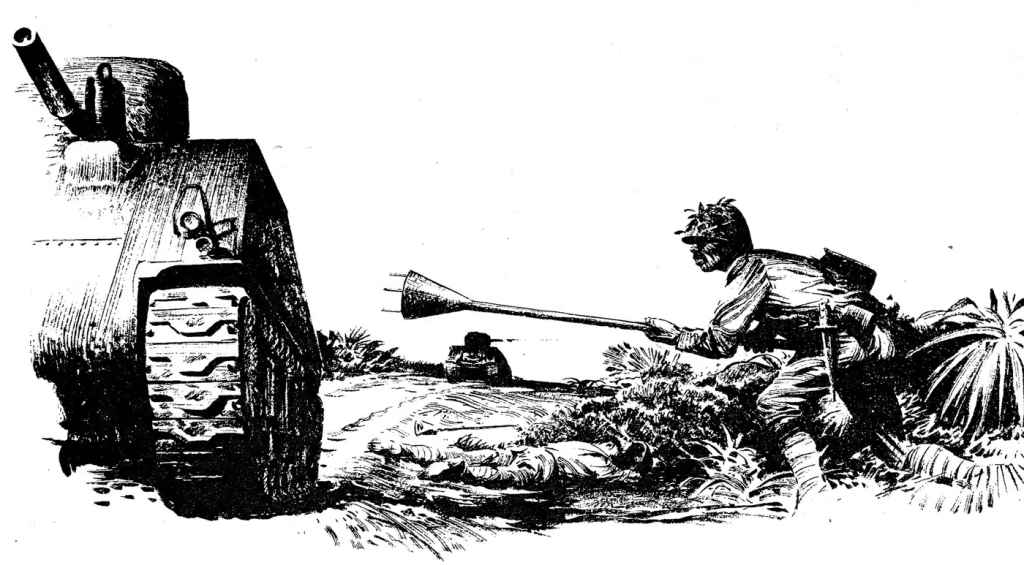
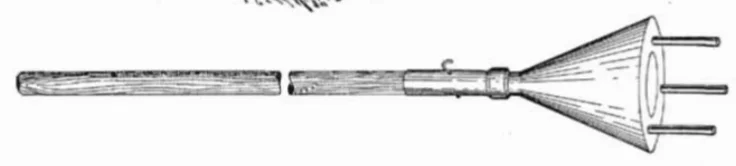
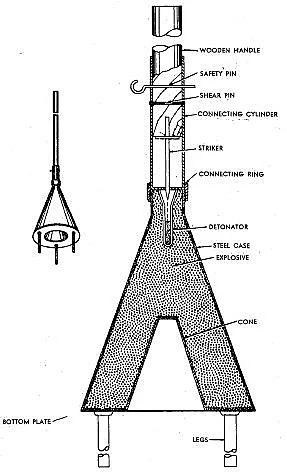
The lunge mine was a 12-inch-long and 8-inch-wide pole made from lightweight materials such as bamboo or wood for ease of handling. Mounted on the pole was a 3kg metal cone-shaped explosive charge with three prongs, ensuring it had a correct stand-off distance to achieve maximum penetration.
To detonate the lunge mine, the user had to remove the safety pin when approaching the enemy tank, grasping the handle with his left hand and the butt end with his right hand. The user will hold the pole with the mine in front, while charging towards the target, and thrust the three prongs against the tank’s armor. The impact will break the sheer pin and the striker nail will be shoved into the detonation cap. Hence, exploding the mine and damaging the tank but likely killing the user in the process.
Although simple in design, the lunge mine is ideal for close-quarter ambushes and attacks, considering Japan’s short supply and resource constraints in producing complex anti-tank weapons. If used correctly, the mine can effectively penetrate the 150mm or 38mm side armor of an enemy tank such as the American Sherman. However, it requires the user to lure the tank into a vulnerable position without detection. The lunge mine saw action in various Pacific threaters of WW2, such as the battle of Saipan and Okinawa. This includes the Soviet invasion of Manchuria in August 1945, when the mine was used as a desperate last-ditch weapon against Soviet tanks.
https://www.warhistoryonline.com/war-articles/japanese-lunge-mines.html

 Military Battle Zone
Leave a comment