The supergun is a long-range and massive-barreled artillery piece envisioned by Canadian engineer Gerald Bull to launch a satellite into orbit.
A charismatic and ambitious academic, Gerald joined the Canadian Armament Research and Development Establishment in the 1950s, where he explored the use of artillery guns for supersonic aerodynamics research as a cheaper alternative to the high-speed wind tunnels used by conventional rockets. This was later developed into a joint American and Canadian initiative known as HARP (High Attitude Research Project), aimed at exploring ballistics at extremely high altitudes. One of its most notable achievements was the creation of a massive modified ex-navy gun capable of firing projectiles into the stratosphere. By 1962, the HARP gun could fire a 330-pound finned projectile at over 10000 feet per second, reaching altitudes of 215000 feet.
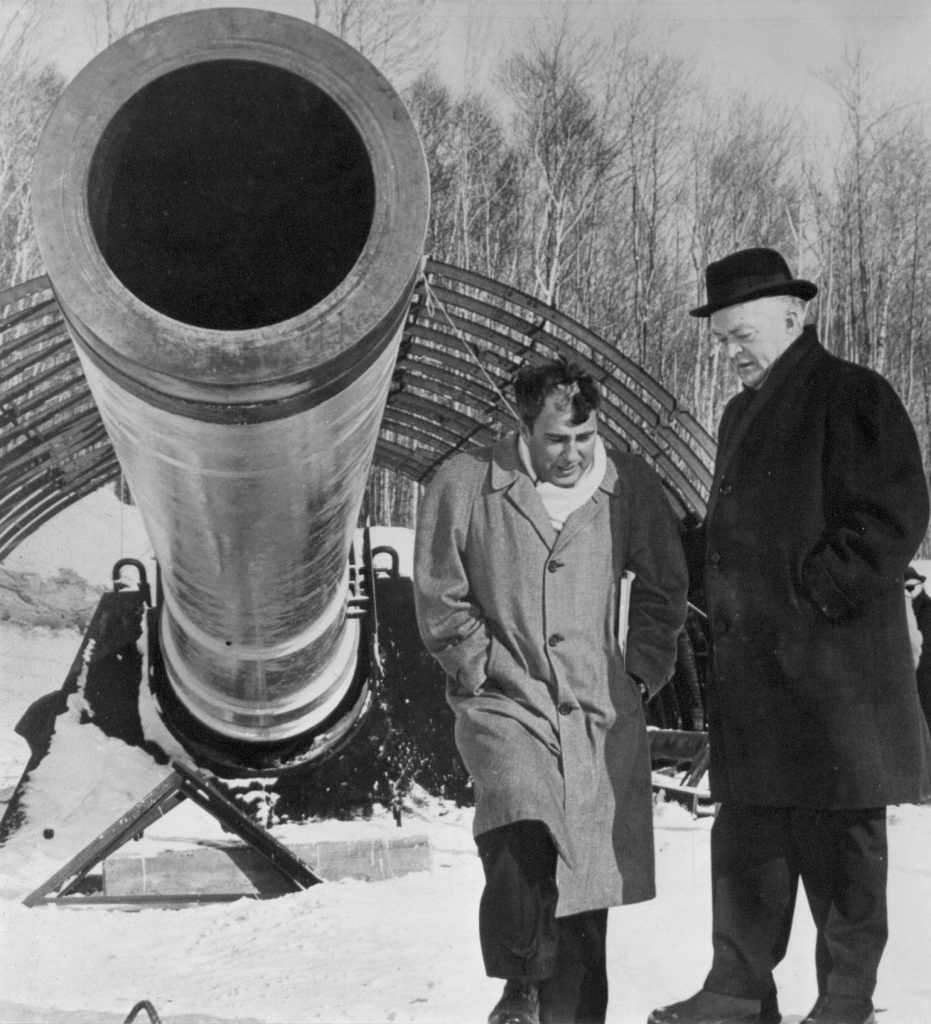
This set the stage for Gerald’s growing obsession with superguns. Despite attempts by him and his colleagues to design one that can fire projectiles so fast it can reach orbit, political and financial pressure, especially from the high cost of the Vietnam War, eventually forced the HARP initiative to shut down, leaving Gerald with no other choice but to find other alternatives to pursue his goal.
In 1967, Gerald established the SRC (Space Research Corporation), which operates as an artillery consultancy for international clients, including the US and Canadian militaries, to improve the range and accuracy of their artillery. The SRC would go on to sell weapons to countries around the world while the development of the orbital gun technology became a side project. By the late 1980s, after serving jail time for violating an international embargo on South Africa, Gerald began to distance himself from his clients in the West and take up opportunities in China and Iraq, where the culmination of his work drew the interest of then-Iraqi defence secretary, Saddam Hussein.

Officially known as Project Babylon, Gerald was paid 25 million dollars by the Iraqi government to design a true supergun on the condition that he would work on their artillery. The project would see the construction of multiple “Baby Babylon” guns each measuring 147 feet with a caliber of 13.8 inches but ultimate goal, was the two mighty “Big Babylon” guns which measured 512 feet long with a massive 39 inch bore capable of not only launching a 440 Ib satellite into an orbital trajectory but also fired a 1300 Ib projectile at a vast distance of over 620 miles.
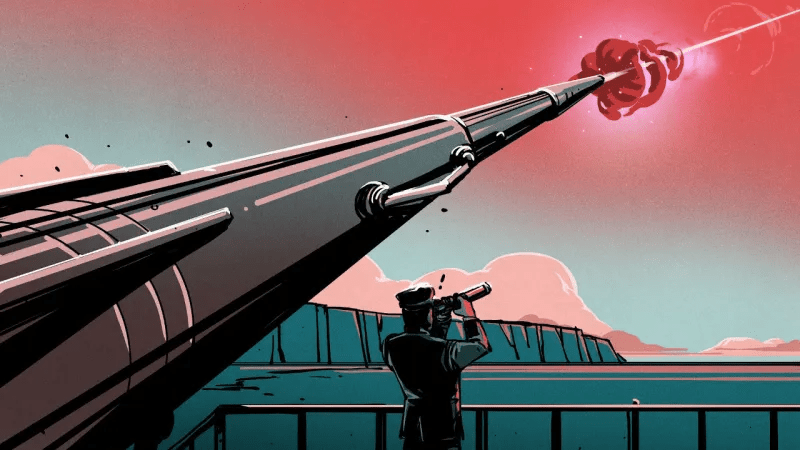
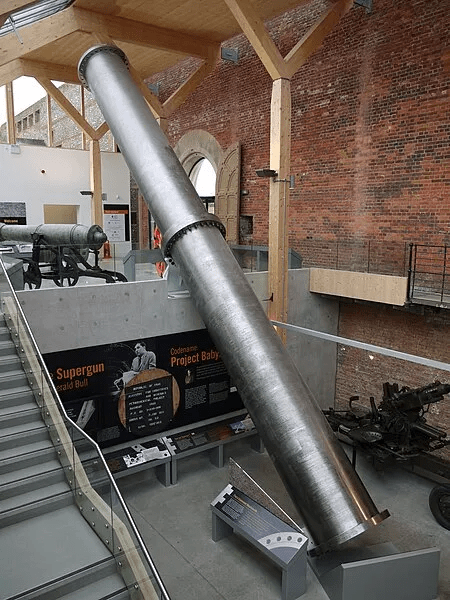
Although Project Babylon progressed as intended through muitiple tests and manfactured components in western countries like (Britain, France, Germany, etc), there are immense challenges in achieving the design of the supergun such as the necessary muzzle velocity needed to reach orbit requiring extremely durable materials and unprecedent gun lengths to withstand the immense pressures involved. Other than the technical challenges, there are also the political implications as the production of a large Iraqi gun have become a source for international concern although using a supergun in miltary action can be considered impractical due to its huge size and structure being vulnerable to air attacks. Regardless, given the fraught political situation at the time, Gerald Bull’s involvement in the development of not only the supergun but also Iraqi scud weapons, had made him more unpopular to Iraqi’s enemies and thus cost him his life.
In 1990, Gerald was assassinated outside his apartment in Belgium and the supergun was never completed. Still, the foundational concept of high altitude launches continued to influence many active miltary and space researches today . However, its legacy under its engineer, Gerald Bull shows the complexity of how the interest of technology, science and politics can lead to harsh consequences.

 Military Battle Zone
Leave a comment